
Tesla
Tesla Sunshade, Dubai Edition
Teslas get warm in a slightly different way to most cars, and a windshield sunshade solves part of that problem rather than all of it. Here is the honest version: what the glass is doing, what a shade covers, why the Model 3 and Model Y do not share one, and how to size yours.
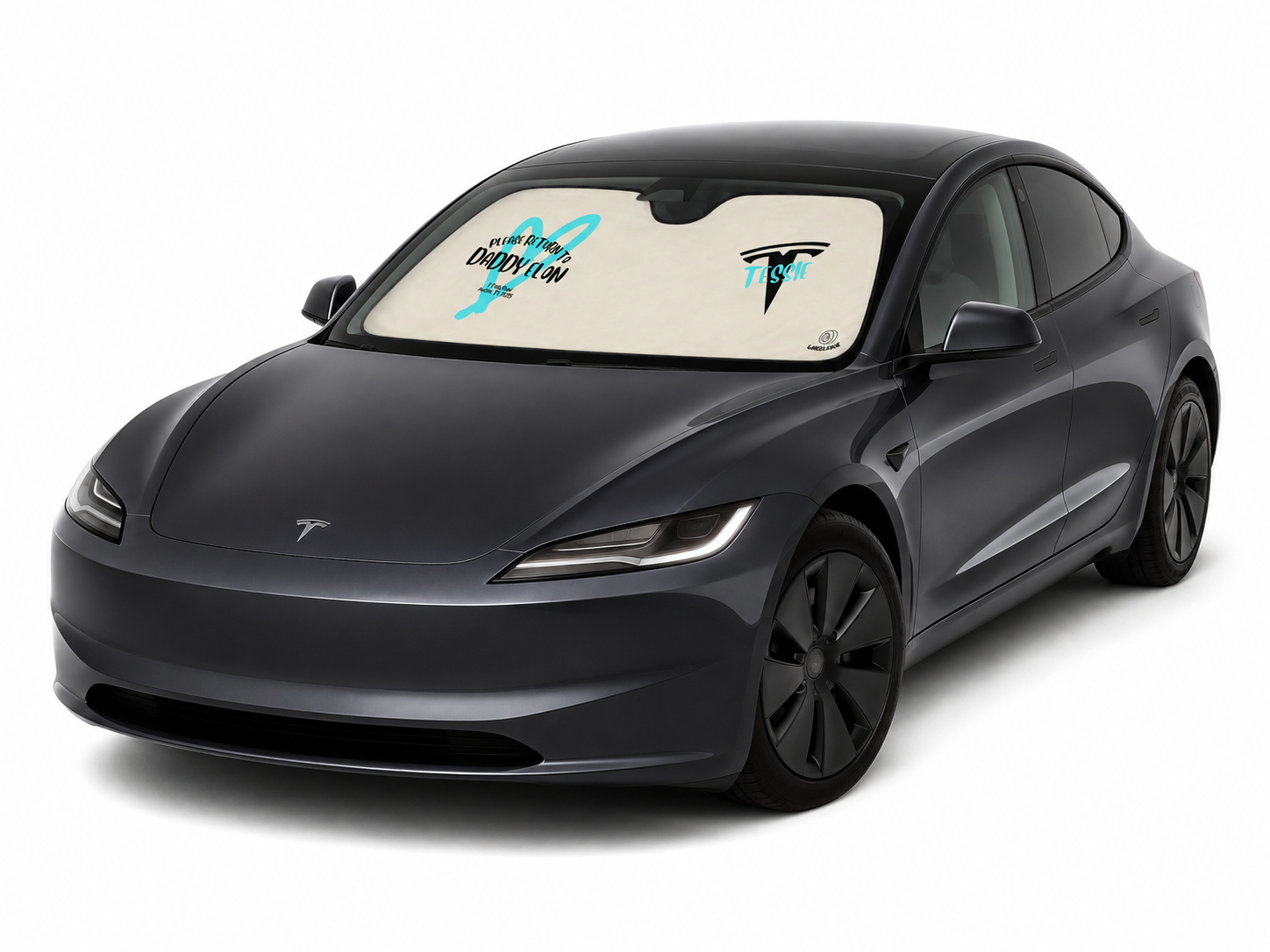
Why a Tesla heats up differently
Three things about the way these cars are built change the sun problem. The first is the windshield itself: it is large and heavily raked, so it presents a wide, shallow surface to the sky. A steeply angled windshield collects sunlight for more of the day than an upright one, and it sends that light deep into the cabin — across the dashboard and onto the front seats rather than just onto the glass line.
The second is the roof. Many Tesla configurations use a full glass panel overhead. That is lovely to sit under and a meaningfully larger area of glazing than a conventional metal roof with a small sunroof. More glazing means more surface through which direct sunlight reaches the interior.
The third is the interior itself. The cabin is deliberately minimal, with broad uninterrupted surfaces and, on many trims, light upholstery and a large centre screen. There is very little in the way of built-in shading, deep binnacles or overhanging trim to cast shadow over anything. Sunlight that gets in tends to land on something flat and stay there.
None of that makes a Tesla unusually fragile. It does mean the front glass is doing a lot of work, and it is the one piece of glazing you can cover cheaply and reversibly.
What a windshield shade covers — and what it doesn’t
A front windshield sunshade blocks direct sunlight from reaching the area behind it. In practice that is the dashboard, the top of the centre console, the steering wheel and the front of the seats. Those are the surfaces you touch first, and they are the ones that get uncomfortable fastest in direct sun.
What it does not cover is everything else. A glass roof is a separate problem that needs a separate product — a windshield panel cannot reach it, and no honest brand should imply otherwise. Side and rear glass are also outside its remit; that is the territory of window film. And a shade does not cool the air inside a parked car. Air heats regardless, body panels absorb sun regardless, ventilation still matters. Never leave children or pets in a parked vehicle, shade or no shade.
If you want the mechanism explained properly rather than sold to you, our guide to whether car sunshades actually work in UAE heat goes into what shading realistically changes.
Model 3 and Model Y are not the same windshield
This is the most common assumption we hear, and it is the one that costs people money. The two cars share a design language and a great deal of hardware, but they do not share a windshield aperture. The Model Y is the taller, more upright vehicle: its glass sits higher, the roofline is further from the dashboard, and the rake through the front glass is less shallow. The Model 3 is lower and longer through the front, with a flatter angle of attack.
A shade cut for one will be wrong for the other in a way you notice immediately. Sized for the Model 3 and fitted to a Model Y, it leaves bare glass along the top edge — exactly where the sun is highest. Sized for the Model Y and fitted to a Model 3, it has nowhere to go: it buckles in the middle and slumps forward onto the dashboard. Neither failure is subtle.
Model year matters too. Both cars have been revised since launch, and a shade that fit an early build is not guaranteed to fit a current one. Which brings us to the only reliable approach.
Measure your own car
Take three numbers with a soft fabric tape, from inside the car: the width of the glass at its widest point, the height at the centre from the top edge down to where the glass meets the dashboard, and the width near the roofline so you know how hard the windshield tapers. Note where the mirror mount and any camera housing sit while you are in there.
Our car sunshade size guide walks through each measurement, the common mistakes, and a quick daylight check to run once a shade is in place.
How this relates to Tesla’s cabin overheat protection
Teslas include a built-in feature intended to manage cabin temperature while the car is parked, and it operates using the car’s own systems rather than anything you install. We are not going to quote thresholds or make claims about how it performs — Tesla documents its own behaviour, it has changed across software versions, and your settings are yours.
The useful way to think about the relationship is by mechanism. A shade works before the heat happens: it stops a portion of direct sunlight from landing on interior surfaces in the first place. The car’s own feature works on the cabin as a whole using energy from the battery. They are not competing approaches, and one is not a substitute for the other. If less sunlight reaches the dashboard, there is simply less of a problem for anything else to deal with.
Tessie: our Tesla shade
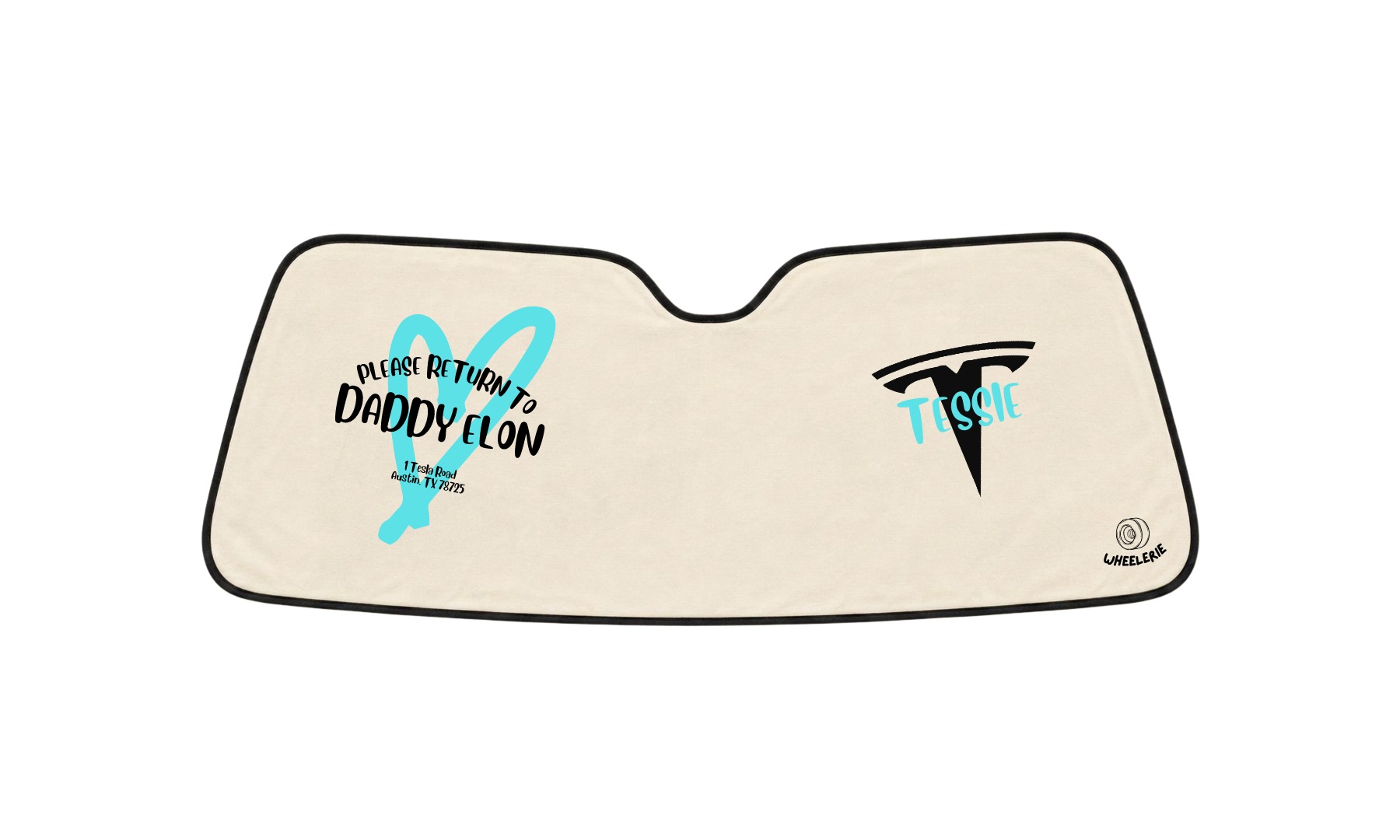
Tessie is WHEELERIE’s Tesla-specific design and the oldest thing we make. It was drawn in 2022 and never launched: “Please return to Daddy Elon” on one side, “Tessie” on the other, finished with a Tiffany-blue heart. It is a small tribute to the era when owning a Tesla felt like having a slightly too personal relationship with the man who made it. It was 2022. We stand by it.
Tessie is pre-launch. There is no price, no cart and no shipping estimate yet, and we are not publishing a vehicle compatibility table until we can stand behind every row of it. Launch details, final sizing and Model 3 / Model Y fitment go to the waitlist first — you can join the WHEELERIE waitlist on the homepage.
Elsewhere: our car sunshades for the UAE page covers what we look for beyond size, and sunshade versus window tint explains why the windshield is the one surface film mostly cannot help with.