Designs
Funny Car Sunshades in the UAE
A printed sunshade is a joke you tell to a car park. That is a genuinely nice thing to own — right up until the print goes chalky by September. Here is what separates a good novelty shade from a disposable one in this climate, and what to think about before you put words on your windshield here.
Why printed sunshades caught on
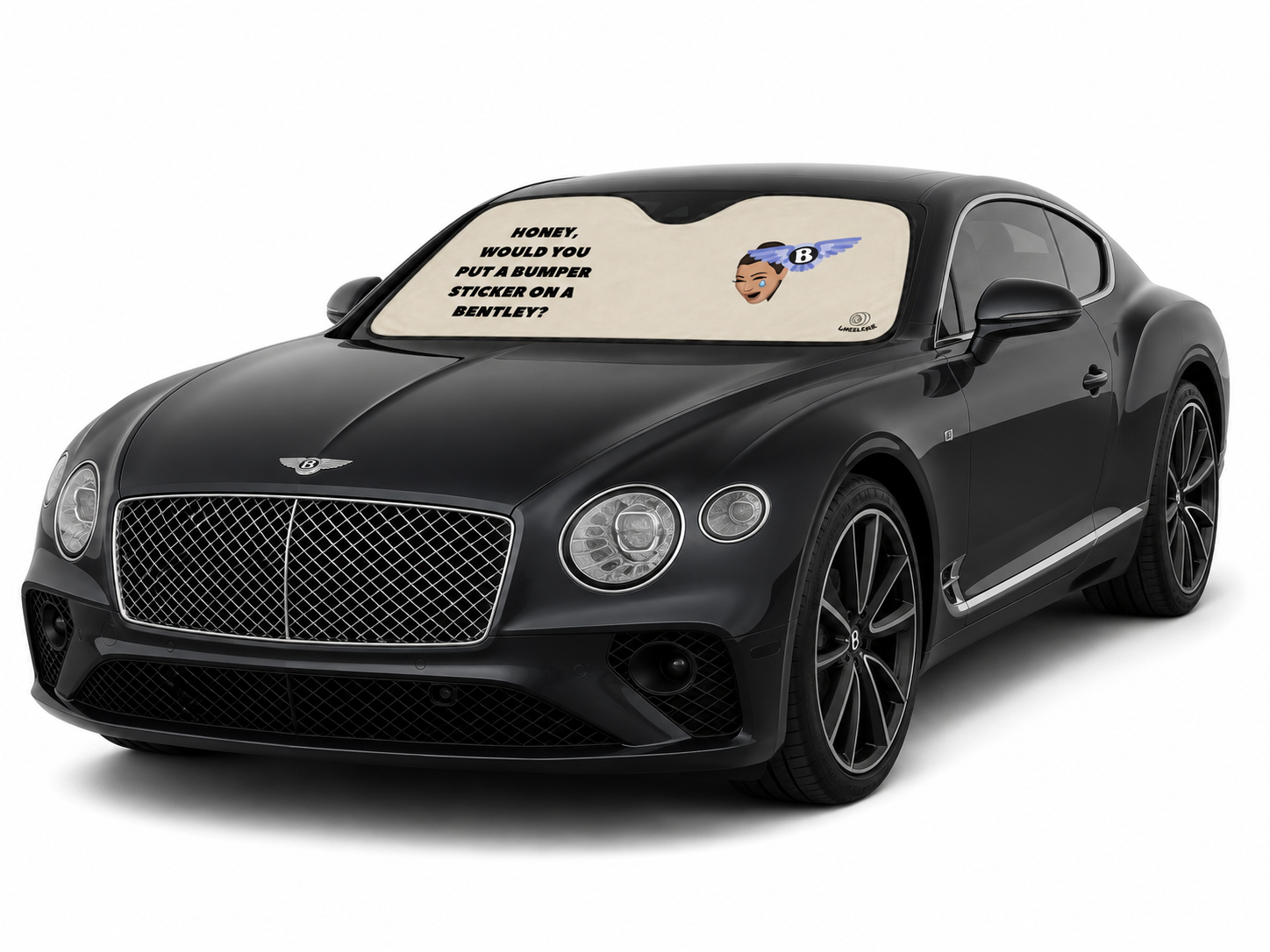
The reason is not complicated. A parked car is a display surface, and the windshield is the largest, flattest, most head-on part of it. It is the one panel a passer-by looks straight into. For decades the accepted thing to put there was a crinkled silver rectangle, identical to the crinkled silver rectangle in the car beside it and the one beside that.
People spend months choosing a car — the spec, the wheels, the interior, the exact shade of paint — and then park it with the visual equivalent of a foil takeaway lid in the front window. A printed shade is simply the obvious correction. It also happens to make your car findable on level four of a mall car park, which is not the point but is a real benefit.
The problem is that the category filled up quickly with things that are funny in the product photo and embarrassing in month three.
What separates a good printed shade from a cheap one here
UAE conditions are unusually hard on this product. Long stretches of sustained direct sun, high surface temperatures behind glass, fine dust, and a shade that gets folded and unfolded twice per trip, every trip, all year. Four things decide whether it survives that.
Print fade
This is the first thing to go, and it is what makes a novelty shade look sad rather than funny. Sustained direct sunlight is brutal on pigment. Cheap shades are often printed with whatever process was cheapest per unit onto whatever surface was available, and the result shifts: blacks grey out, reds are usually first to fade, and fine linework goes soft. The fade is uneven too, because the panel is not evenly lit — the strip that sits highest in the glass takes the most punishment. When you are assessing a shade, ask what the print is and what it is printed onto. A vague answer is an answer.
Fabric versus foil
Foil-faced shades are the classic construction: reflective, cheap, and structurally dependent on a thin laminate that eventually delaminates, splits along crease lines and starts shedding. Fabric and fabric-backed panels behave differently — they take print far better, they crease rather than crack, and they tend to look like a made object rather than a wrapper. Foil is not automatically bad and fabric is not automatically good, but the construction is what determines how the shade ages, and it is the thing cheap products are least specific about.
Edges
Look at the perimeter before anything else. A raw cut edge on a printed panel is a fraying schedule. The edges are handled every single time the shade goes in or comes out, they are what drags against the glass and the sun visors, and they are where dust works its way into the layers. A finished, bound or sealed edge is unglamorous and it is the difference between eighteen months and one summer.
How the panel holds its fold
A shade lives folded. Whether it can do that hundreds of times is the real durability test, and it is entirely about construction rather than material marketing. Watch for a panel that stops springing back flat, that develops a permanent kink where it wraps the mirror mount, or that gradually needs more persuasion to sit against the glass. Once a shade stops holding its own shape, it stops holding its position, and a shade that will not stay put is a shade you stop using. Fit interacts with all of this — our car sunshade size guide covers how to measure so the panel is not fighting the glass in the first place.
Before you print words on a windshield in the UAE
This is the part most novelty shade guides skip, and it is worth a straight answer. A printed windshield shade is public. It faces outward, it is readable from several metres away, and it sits in your car in a mall car park, a residential compound, a school pick-up line and your office building. Whatever it says, it says to all of those audiences at once, and you are not there to add context.
In the UAE, anything publicly displayed on a vehicle sits within broader public decency norms. That is a cultural reality as much as an administrative one, and it is worth treating seriously rather than defensively. Practical guidance, not legal advice:
- Assume the widest possible audience. If a phrase only works for people who already know you, it is the wrong phrase for a windshield.
- Avoid profanity, sexual innuendo and crude imagery. It reads very differently on a car in a family car park than it does on a phone screen.
- Steer clear of religion, politics, national symbols and anything that could be read as mocking a country, community or leadership.
- Be careful with jokes that rely on aggression toward other drivers or police. A joke you cannot explain calmly to a stranger is not worth the windshield.
- Watch the translation problem. A phrase that is harmless in English can land badly in Arabic or another first language, and vice versa.
- Copyrighted characters and brand logos are a separate risk from a decency one, and a real one.
The simple test: would you be relaxed if the person parked next to you photographed it? Cheeky is fine. Cheeky is arguably the whole appeal. Crude in public is a different thing, and this is a country where that distinction matters.
Also, and separately: whatever it says, take it out of the windshield before you drive. A shade is for a parked car, and nothing should obstruct the driver’s view. Rules on what may be displayed on or applied to a vehicle can change, so confirm current UAE regulations with the RTA or your local authority if you are unsure.
How WHEELERIE approaches it
Everything we make is drawn in-house. No licensed characters, no stock graphics, no meme bought from a marketplace and stretched to fit a panel. That is partly a taste decision and partly a practical one: original work is the only kind you can design specifically for the proportions of a windshield, which is an odd, wide, tapering canvas that almost nothing else shares.
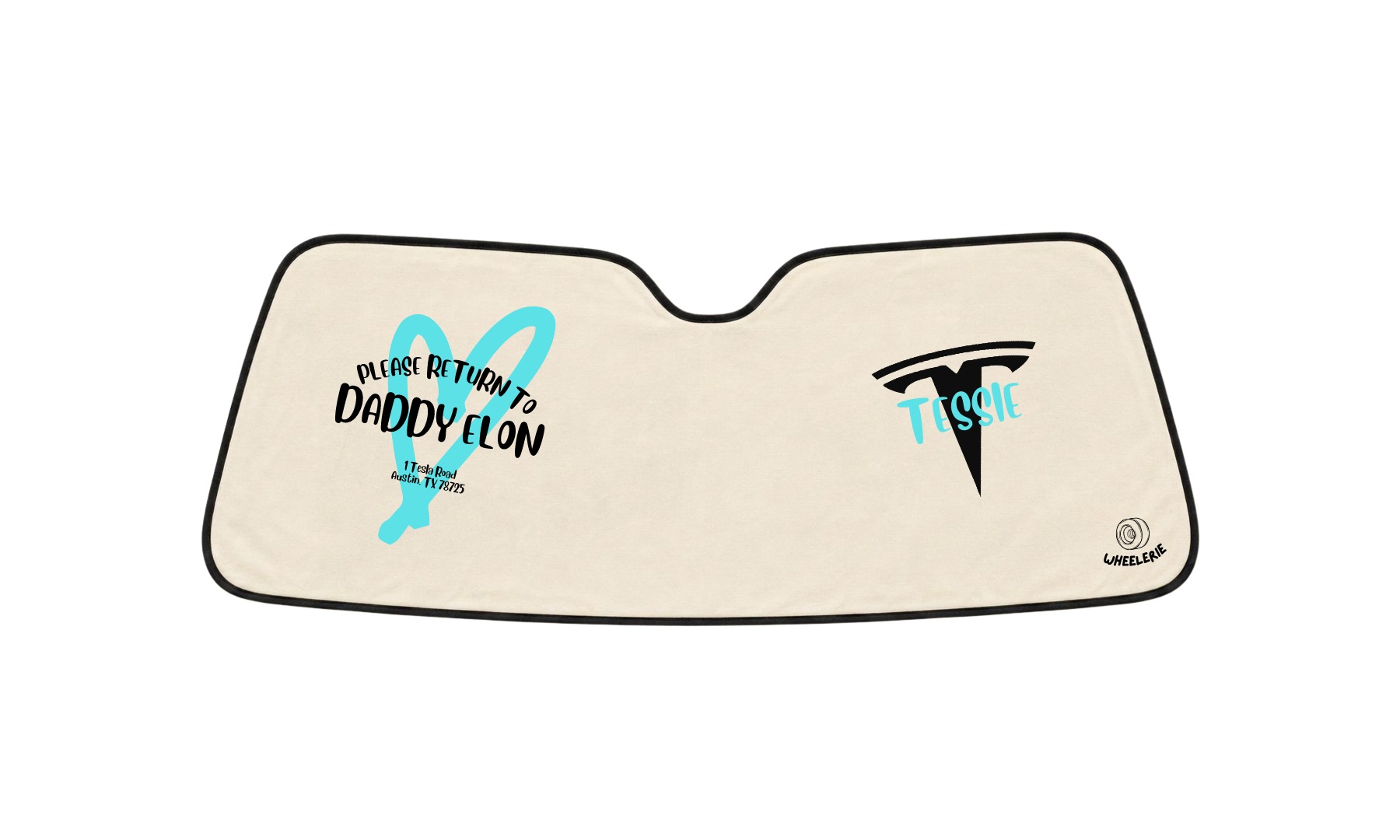
Our designs are named rather than themed — Tessie for the Tesla, Kimmy, John — and they are jokes with a point of view rather than slogans. Tessie was drawn in 2022 and sat unlaunched for years, which tells you roughly how quickly we move and how much we like it.
WHEELERIE is pre-launch: no price, no cart, no shipping estimate yet. Join the waitlist on the homepage for launch details. If you have a Tesla, our Tesla sunshade page for Dubai is the more specific read, and car sunshades for the UAE covers the functional side in full.