
Journal
Do Car Sunshades Actually Work in UAE Heat?
Short answer: yes, but only for the specific job they do. Here is what a windshield sunshade changes, what it does not, and why the answer depends almost entirely on coverage and fit rather than on branding.
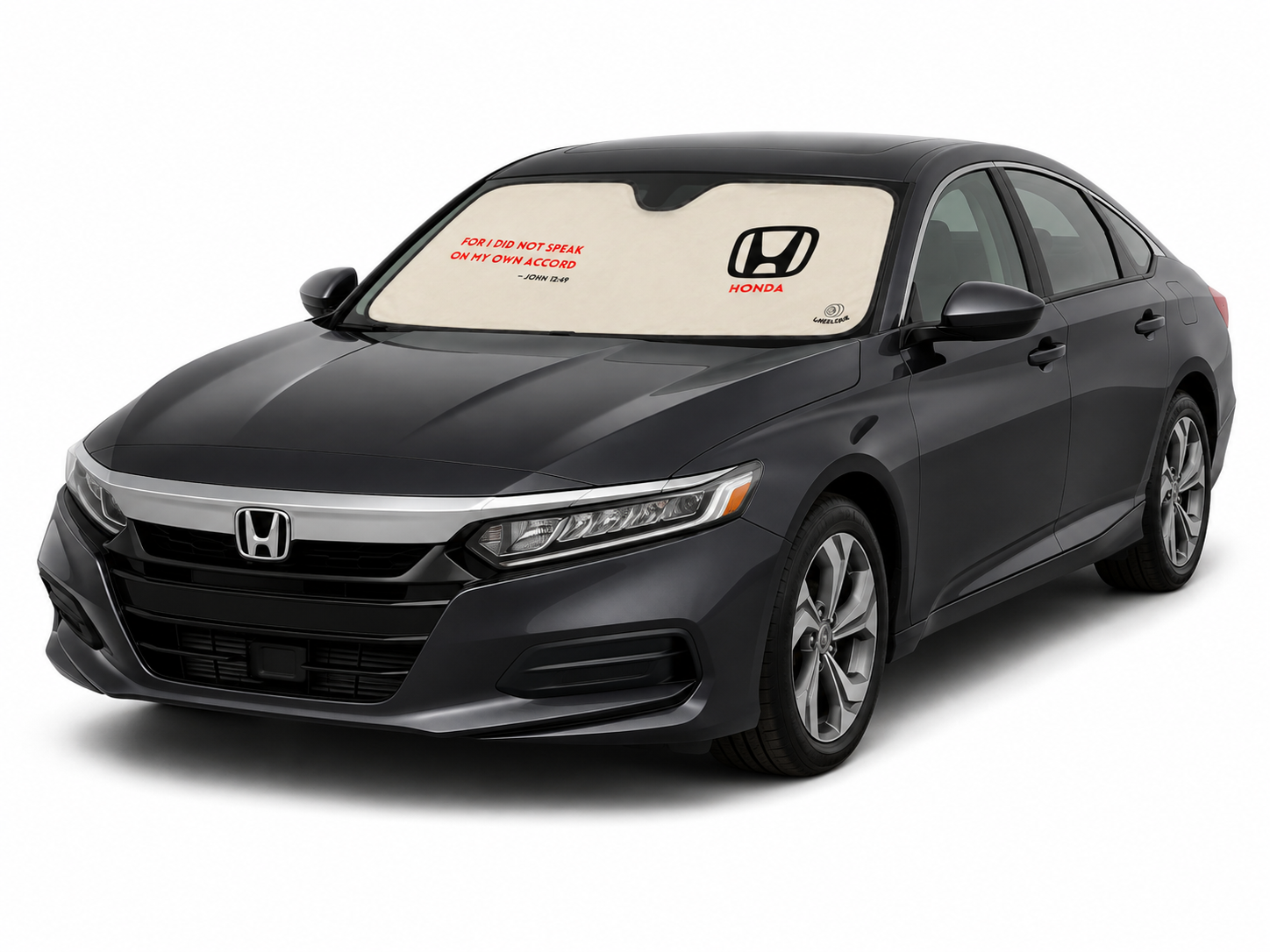
What is actually happening in a parked car
Sunlight arriving at your windshield is mostly visible light and near-infrared radiation. Glass passes a large share of it straight through. Once inside, that radiation lands on the dashboard, the steering wheel, the seats and the trim — dark, absorbent surfaces that convert it into heat. Those surfaces then warm the air around them and re-radiate energy at longer wavelengths that the glass is far less willing to let back out.
That asymmetry is the whole story. Energy comes in easily and leaves slowly, and a sealed cabin has nowhere to dump it. This is why a car parked in the sun ends up hotter than the air outside it, and why the parts that hurt to touch are the ones the sun has been shining directly onto.
In the UAE, three things make this more pronounced than in most places: ambient temperatures are high for much of the year, the sun sits high in the sky so a large share of radiation reaches the windshield and dashboard directly, and outdoor parking is often unavoidable and long.
So what does a sunshade change?
A windshield sunshade sits between the glass and the cabin and intercepts direct sunlight before it lands on interior surfaces. That reduces the direct solar loading on the dashboard and the upper seats — the surfaces that would otherwise take the brunt of it — and shifts the absorption to the shade itself, which sits against the glass where more of the heat can be shed back outward.
The practical outcomes people notice are mostly about surfaces rather than air: a dashboard and steering wheel that are less punishing to touch, seat belt buckles that are more survivable, and a cabin whose air conditioning has less accumulated surface heat to fight when you start the car. There is also a longer-term angle — sustained direct sun is hard on dashboards, upholstery and adhesives, and shading the windshield is the cheapest way to reduce that exposure.
We are deliberately not giving you a number here. Plenty of sunshade marketing quotes exact temperature reductions or UV percentages with no test conditions attached, and those figures depend enormously on vehicle, glass, parking orientation, duration and time of year. WHEELERIE plans to publish its own UAE heat-testing data when we have run it properly. Until then we would rather say what the mechanism is than invent a statistic.
Why coverage and fit decide the outcome
A shade blocks sun only where it physically sits. A gap along the top edge of the windshield is a gap where the sun is highest and hitting hardest, and triangular gaps at the corners let light straight onto the dashboard. Two shades made of identical material can perform very differently purely because one reaches the edges and the other does not.
Fit also determines whether the shade stays put across a whole day of parking. A panel sized to the glass holds tension behind the sun visors; one that is slightly small slumps forward, and one that is oversized buckles and creates its own gaps. If you want to check your own car properly, our car sunshade size guide walks through the measurements that matter.
Orientation matters too, and it is free. Where you have a choice, parking so the windshield faces away from the afternoon sun does real work, and combining that with a shade does more than either alone.
The limits, stated plainly
A sunshade is not climate control. It reduces direct solar loading on your interior; it does not make a parked car cool, and it does not make a parked car safe. Air inside a closed vehicle can reach dangerous temperatures with a sunshade fitted. Never leave children, older adults, or pets in a parked car, in any season, for any length of time, shade or no shade.
It also does not replace ventilation or air conditioning. Cracking windows where it is safe to do so, running the AC on fresh air for the first minute of a drive, and using window-side shading for rear passengers all address parts of the problem a windshield panel cannot. And it does nothing for the four other windows, the roof, or the body panels absorbing sun all day.
Finally, no sunshade is a substitute for glass treatment or well-specified factory tinting where those are legal and appropriate for your vehicle. These are complementary measures, not competing ones.
How we think about it at WHEELERIE
Our position is unremarkable on function and deliberate on everything else. Cover the glass properly, fit the car it is made for, fold without a fight, survive a UAE summer — and stop looking like a crumpled sheet of foil while doing it. The functional brief for a sunshade was solved decades ago; the part nobody bothered with was how it looks in the most visible surface of a car you probably chose carefully.
WHEELERIE is currently pre-launch. If you want the launch details, sizing and any testing data when it exists, join the waitlist on the homepage, or read more about our approach on car sunshades for the UAE.
Related reading: if the comparison you are actually weighing up is film versus a panel, see car sunshade vs window tint in the UAE. Tesla owners have a slightly different set of variables, covered in our Tesla sunshade guide for Dubai. And if you would rather your shade were not silver, printed and novelty sunshades covers what actually survives the heat.